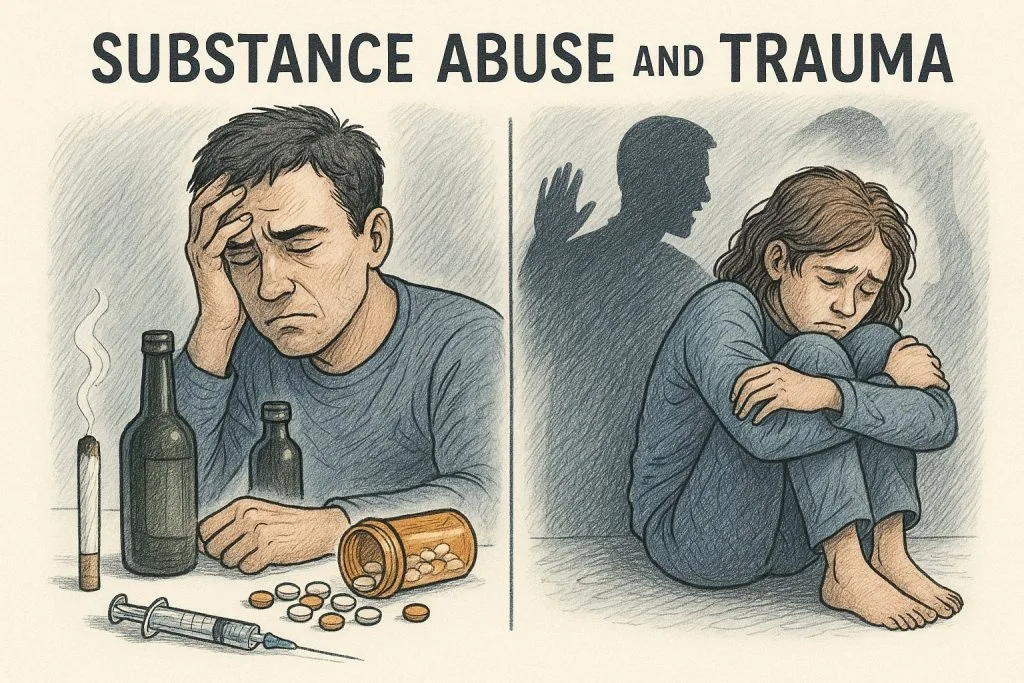
Trauma and substance use are often treated as separate struggles. One is seen as an emotional wound, the other as a behavior problem. In real life, they can be tightly connected.
To create this guide, current clinical research and public health resources were reviewed to explain the connection in plain language for people trying to understand their patterns or support someone they love.
For many people, alcohol or drugs are not used at first to “party” or rebel. They are used to quiet memories, ease panic, fall asleep, feel less numb, or get through the day. That does not make substance use safe, but it helps explain why healing often needs to go deeper than willpower.
In this article
Key Points
Trauma-informed care can matter as much as location, so someone comparing options for mental health rehab in Utah should ask how a program screens for trauma, depression, PTSD, and substance use together.
Substance use can become a short-term coping tool that creates long-term harm.
Healing often works best when people address both the substance use and the pain underneath it.
Why Trauma Can Increase the Risk of Substance Use
Trauma is not only what happened. It is also how the body and mind respond afterward. A car crash, assault, childhood neglect, emotional abuse, sudden loss, community violence, or living with constant fear can all leave a lasting mark.
After trauma, the nervous system may stay on high alert. A person may feel jumpy, angry, numb, ashamed, or disconnected from life. Sleep can become difficult. Trust may feel unsafe. Every day stress can seem too big to handle.
Substances can appear to offer fast relief. Alcohol may make the body feel calmer for a few hours. Opioids may soften emotional pain. Stimulants may help someone push through exhaustion. Cannabis may quiet racing thoughts.
The trouble is that the relief fades, and the original pain remains. Over time, the brain may start to rely on the substance to manage distress. That can turn a coping habit into a hard-to-break cycle.
This is why blame is so unhelpful. Many people with substance use struggles are not trying to destroy their lives. They are trying to survive feelings they never learned how to process safely.
Signs the Two Issues May Be Connected
The link between trauma and substance use is not always obvious. Some people remember a clear event that changed them. Others grew up in homes where fear, criticism, addiction, or neglect were normal, so they may not label those experiences as trauma.
A few signs may point to a deeper connection:
- A person drinks or uses drugs after reminders of a painful event.
- Substance use increases during stress, conflict, loneliness, or anniversaries of loss.
- Sobriety brings up nightmares, panic, anger, grief, or emotional numbness.
- The person says things like, “I can’t relax without it,” or “I don’t want to feel anything.”
- Treatment has focused only on stopping the substance, but relapse keeps happening when old pain resurfaces.
Trauma can also affect self-worth. Someone may feel broken, guilty, or undeserving of care. Those beliefs can make it harder to ask for help, stay in treatment, or believe recovery is possible.
Trauma can also change routines, relationships, and support systems. A person may isolate from friends, struggle at work, or lose trust in family. Without strong support, substances can fill the empty spaces.
Still, trauma does not guarantee addiction. Many people who live through painful events never develop a substance use disorder. Risk depends on many factors, including genetics, social support, age, stress levels, and access to care. The key point is that trauma can raise vulnerability, and that vulnerability deserves attention.
What Healing Can Look Like
Healing usually starts with safety. That may mean medical detox, a stable living situation, crisis support, or a treatment team that understands both trauma and substance use. For some people, stopping substances suddenly can be risky, so professional guidance matters.
From there, trauma-informed care can help. This approach does not ask, “What is wrong with you?” It asks, “What happened to you, and what do you need now?” That shift can lower shame and make treatment feel less threatening.
Helpful treatment may include therapy that teaches grounding skills, emotional regulation, and healthier ways to respond to triggers. Some people benefit from cognitive behavioral therapy, EMDR, group therapy, family support, or medication for depression, anxiety, cravings, or sleep. The right mix depends on the person.
A strong recovery plan also includes daily tools. These can sound simple, but they help retrain the nervous system:
- Regular sleep and meals
- Movement that feels manageable
- Time with safe, supportive people
- A plan for cravings and triggers
- Calming practices, such as breathing, journaling, or spending time outside
- Clear boundaries with people or places tied to substance use
Support groups can help too, especially when they feel respectful and nonjudgmental. Hearing someone else say, “I used to for the same reason,” can reduce the loneliness that keeps people stuck.
Healing is rarely a straight line. A person may make progress, hit a trigger, and feel like they are back at the start. That does not mean treatment failed. It means the plan may need more support, more practice, or a better fit.
Loved ones can help by staying calm, learning about trauma, and avoiding shame-based language. Support does not mean ignoring harm or removing every consequence. It means holding boundaries while still treating the person as someone capable of recovery.
A Better Way to Understand Recovery
When trauma and substance use overlap, recovery is about more than stopping the substance. It is about building a life where that substance is no longer needed to feel safe, calm, or in control. With the right support, people can treat the wound, change the coping pattern, and begin to feel grounded again.